
Uncategorised

- Details
- Written by: NYSUT Communications
- Category: Uncategorised
- Hits: 3339
A Generation in Crisis
For over a decade, educators have witnessed a disturbing shift in our students' well-being.
What was once a vibrant hum of conversation in hallways and cafeterias has too often been replaced by the silent glow of screens. This is more than just a behavioral change; it's a symptom of a deeper crisis fueled by the unchecked rise of smartphones and social media in the lives of our youth. The correlation between the rise of smartphones and the decline in youth mental health is undeniable.
The Mental Health Emergency
The data reveals a stark picture of a generation facing unprecedented mental health challenges.

Soaring Rates of Anxiety, Depression, and Suicide
- Since 2010, anxiety among youth has increased by 134%
- Depression has increased by 106%.
- Suicide is now the second leading cause of death for children ages 10-14.

A Staggering Toll on Teens
- One in three teen girls has seriously considered attempting suicide, a nearly 60% increase from a decade ago.
- Teens who spend more than three hours a day on social media face double the risk of negative mental health outcomes.
- Those spending five or more hours are 2.5 times more likely to have suicidal thoughts.

A Declared National Emergency
In response to these alarming trends, which include over 2.7 million children experiencing severe major depression, the American Academy of Pediatrics and other organizations have declared a national emergency in child and adolescent mental health.
Academic Disruption
Classrooms should be sanctuaries for learning, but they are now competing with a constant barrage of digital distractions.

Pervasive In-School Use and Distraction
- 97% of students aged 11-17 use their phones during school hours.
- In a recent survey, 75% of teachers report that cellphones are the number one issue in classrooms.

Constant Notifications
- Students receive an average of 237 notifications daily, significantly fragmenting their attention.
- This has contributed to the average attention span plummeting by 66% since 2004, from 2.5 minutes to just 47 seconds.

Significant Learning Loss
- Students lose an average of 43 minutes of learning time every day to phone distractions.
- Studies confirm that students who use phones during class take lower-quality notes, retain less information, and perform worse on tests.
The Social Disconnect
While promising connection, the reality of constant phone use is deeper isolation and a breakdown of essential social skills.

The Rise of Cyberbullying
- 55% of students report being cyberbullied, and these victims are twice as likely to engage in self-harm and suicidal behaviors.
- Adolescents who experience cyberbullying are more than four times as likely to report thoughts of suicide and attempts.
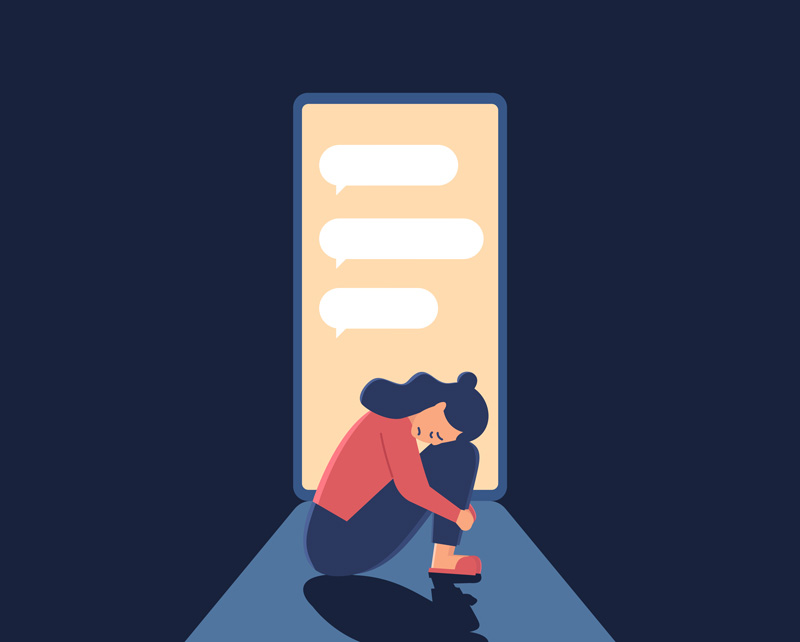
Erosion of Social Skills and Increased Isolation
- With phones replacing face-to-face interaction, students increasingly struggle to read social cues, resolve conflicts, and form authentic friendships.
- The curated perfection of social media fuels anxiety and comparison, leaving many teens feeling more isolated than ever.
- In fact, rates of school loneliness have doubled since 2012.
The Solution
After a year of analyzing the student cellphone crisis, it became clear that half-measures like restricting phones only during class time are not enough.
The only policy that truly works is a comprehensive, bell-to-bell restriction that provides a consistent, distraction-free environment for the entire school day. Schools across New York that have already adopted this approach report dramatic, positive results, including a significant reduction in bullying, a 44% decrease in behavioral referrals, and an increase in academic success rates. Learn more about why this evidence-based solution is the clear choice for New York's students

- Details
- Written by: NYSUT Communications
- Category: Uncategorised
- Hits: 2831
"This isn’t about being anti-phone or anti-technology — it’s about being pro-childhood. We’re giving students seven hours a day free from distractions so they can focus on learning, access their creativity, and make real human connections."
~ NYSUT President Melinda Person
In nearly a year of analyzing this crisis, it became clear that half-measures wouldn't work. An instructional-time-only restriction simply shifts the problem to hallways, lunchrooms, and buses, allowing cyberbullying and social media pressures to continue. The only policy that aligns with our responsibility to protect our children is a comprehensive, bell-to-bell restriction.

Why a Bell-to-Bell Policy is the Only Real Solution
A piecemeal approach fails to address the full scope of the problem. A consistent, school-wide policy is the only way to create an environment where students can truly thrive.
Big Problems Require Bold Solutions, Not Half-Measures
If we truly believe the research showing the detrimental effects of these devices, bell-to-bell restrictions are the only policy that aligns with our responsibility to protect and educate our children. The status quo is clearly not working—we need comprehensive protection, not half-measures.


The Status Quo Is Not a Solution
Instructional-time-only restrictions represent a puzzling contradiction: they acknowledge these devices are harmful enough to ban during class but somehow acceptable during critical social development periods. This inconsistent approach fails to protect students.
Research-Backed Outcomes: Bell-to-Bell Restrictions Implemented Already Deliver Measurable Results.
- 6.27% increase in academic success rates
- 74% of teachers report improved student engagement after implementation
- Significant reduction in behavioral incidents
- More effectively addresses the correlation between social media use and negative mental health outcomes
Proven Results from New York Schools
Schools across New York State that have already gone phone-free are seeing a dramatic transformation. The evidence is compelling.
-

Improved School Climate
Districts report a significant reduction in bullying (up to 46%) and a 44% decrease in monthly behavioral referrals.
-

Increased Student Engagement
Teachers have seen up to a 91% increase in student engagement, with 74% reporting improved student attention.
-

Better Academic Outcomes
These policies have led to a 6.27% increase in academic success rates for students.
Voices from Our Schools
"It has been absolutely wonderful to see kids talking and having conversations again, not engrossed with their phones.” 18
- Kimberly Popken, President, Poughkeepsie Public School Teachers Association
"On day one, our educators noticed students engaged with each other, talking through problems...working out issues rather than trying to solve issues on a cellphone." 19
- Dave Blanchard, Superintendent, Schoharie Central Schools
"Our halls are lively again, conversation has come back, and it's like the old days where I see their smiles, I see their eyes, and I have witnessed firsthand their engagement improve almost immediately." 20
- David Rounds, President, Bethlehem Central Teachers Association
About New York's New Distraction-Free Schools Policy
In May 2025, New York became the largest state to enact a comprehensive bell-to-bell cellphone policy for K-12 schools, backed by a $13.5 million state investment to support implementation. NYSUT and its members championed this landmark law to create healthier and safer learning environments for all students.
- Details
- Written by: NYSUT Communications
- Category: Uncategorised
- Hits: 2487
About the New Bell-to-Bell Cellphone Restrictions
In May 2025, New York became the largest state to enact a comprehensive bell-to-bell cellphone policy for K-12 schools, backed by a $13.5 million state investment to support implementation. NYSUT and its members championed this landmark law to create healthier and safer learning environments for all students.
Key Details of the New Law
Effective Date:
The policy goes into effect for the 2025-26 school year. Each school district must adopt a legally compliant written policy no later than August 1, 2025.
Who this Affects:
The law applies to students in all school districts, charter schools, and Boards of Cooperative Educational Services (BOCES) in New York State.
What is Restricted:
The use of non-school-issued, internet-enabled devices is prohibited on school grounds for the entire instructional day. This includes non-instructional periods such as homeroom, lunch, recess and passing time.
Covered Devices:
The restriction covers any personal device capable of connecting to the internet, including smartphones, tablets, and smartwatches. It does not apply to school-issued devices used for educational purposes.
Local Policy Development:
Each district is required to develop its own written policy in consultation with stakeholders, including employee unions, parents, and students. This allows for local control over implementation details.
Required Policy Components:
Every district's policy must include:
- One or more methods for guardians to contact students during the school day.
- One or more methods for the on-site storage of student devices.
- Written notification to guardians about contact methods.
Permissible Exceptions:
The law allows for specific, authorized exceptions, including:
- Use for a specific educational purpose when authorized by a teacher or principal.
- Use for managing a student's healthcare needs, such as insulin monitoring.
- Use for translation services.
- When included in a student's Individualized Education Program (IEP) or Section 504 Plan.
Discipline & Reporting:
Students may not be suspended solely for violating the cellphone policy. Districts will be required to publish annual reports on the enforcement of the policy to ensure it is applied equitably.
Additional Resources
-
Fact Sheet: Internet-Enabled Device Restrictions in NY (PDF)
-
Distraction-Free Schools: Implementation Resources
-
Research & Documents
- Details
- Written by: NYSUT Communications
- Category: Uncategorised
- Hits: 4052
For Families
How to Get Ready
Research shows families adapt within days of implementation. The result in more reliable communication and less anxiety for everyone.
-

Talk About It
Have open conversations with your child about the reasons for the new policy. Focus on the benefits:
- Less drama and social pressure
- More genuine friendships
- Better focus in school
- mproved mental health
Conversation Starters:
- "How do you think your day might be different without checking your phone?"
- "What activities could you do during lunch instead of scrolling?"
- "How might this help you focus better in your favorite subjects?"
-

Establish Routines
Plan ahead for smooth communication:
- Morning routine: Establish what needs to be communicated before school starts
- After-school plans: Make arrangements the night before or in the morning
- Emergency contacts: Ensure your child knows who to contact through the school office
- Pickup arrangements: Set consistent meeting spots and times
Pro tip: Most schools have reliable systems for relaying messages through the main office—the same systems that worked well before everyone had cell phones.
-

Model Healthy Habits
Children learn by example. Consider implementing these practices at home:
- Create phone-free family dinner times
- Establish "phone parking" areas where devices charge overnight (not in bedrooms)
- Designate screen-free hours in the evening
- Show your children that you can be present without constantly checking your device
-

Know What To Do In An Emergency
Important Safety Facts:
- Schools have comprehensive emergency notification systems that work more effectively than individual cell phones
- Safety experts confirm that cellphones can actually impede safety during a crisis by:
- Distracting from critical instructions
- Overloading cell networks
- Spreading misinformation that creates panic
- School administrators can send accurate alerts directly to all parents simultaneously
- Staff can focus entirely on student safety rather than managing phone-related behaviors
Your school will provide:
- Clear information about their emergency communication system
- Multiple ways to receive urgent notifications
- Procedures for contacting your child during the school day
-

Understand the "Why"
Our children are facing a mental health crisis directly linked to smartphone and social media use. Understanding these facts can help you support the bell-to-bell policy and your child's wellbeing.
Mental Health Emergency
- Youth spending 3+ hours daily on social media face DOUBLE the risk of negative mental health outcomes
- Teens spending 5+ hours daily are 2.5 times more likely to experience suicidal thoughts
- 1 in 3 teen girls seriously consider attempting suicide - up nearly 60% from a decade ago
The Daily Impact
- 97% of students use phones during school hours
- Students receive 237+ notifications daily (23% during school)
- Average teen spends 4.8 hours daily on social media
- 43 minutes of learning time lost each day to distractions
-

Why Bell-to-Bell Protection Works
Academic Benefits:
- 44% decrease in behavioral referrals
- 6.27% increase in academic success rates
- 75% decrease in discipline referrals
- Notable improvements in test scores and engagement
Social Benefits:
- 43-46% reduction in bullying
- Enhanced face-to-face communication skills
- Stronger peer relationships
- More active and engaged lunch periods
Learn More About the Proven Benefits of Bell-to-Bell Phone Restrictions
The move to a phone-free school day is a positive change, and with a little preparation, the transition can be seamless for families.
Frequently Asked Questions
Here are answers to some common questions and concerns about the new bell-to-bell policy that we have heard from school districts that have already successfully implemented such plans.
-
Q: Will I be able to contact my child in an emergency?
A: Under the new law, every school will have established, reliable methods for parents to contact their children and for the school to communicate with families during an emergency.
Safety experts and law enforcement professionals report that cellphones can impede safety during a crisis. Student cellphones can distract from critical instructions, overload networks needed by first responders, and spread misinformation that creates panic.
-
Q: How will I let my child know about a last-minute change in plans or appointments?
A: Schools with bell-to-bell policies have effective systems for routine communication. The school office is equipped to relay urgent messages to students. For non-urgent matters, students can check their phones immediately after dismissal.
-
Q: My child has after-school sports or activities. How will they know if practice is canceled?
A: Schools successfully address this through several approaches. Athletic departments coordinate directly with coaches and school staff to relay schedule changes to students. Many schools with phone pouches unlock them before athletic periods begin, allowing students to check for updates.
-
Q: My older child is responsible for picking up their younger siblings. How will they coordinate?
A: School policies can account for these responsibilities. Phones are accessible immediately at dismissal, which is when siblings are typically picked up. For any unexpected changes, the school office can always relay a message. The law also allows for schools to create special provisions for students with documented caregiver responsibilities.
-
Q: What about students with medical conditions that require a phone for monitoring?
A: The law includes a specific exception for students who need a device for the management of their healthcare, such as monitoring for diabetes. This exemption requires proper documentation from a medical professional and is specific to the medical need; it does not allow for general phone use.
-
Q: Won't this policy just get in the way of teachers using technology for learning?
A: No. The law allows teachers to authorize the use of devices for specific educational purposes. However, the policy does not affect the use of school-issued devices like laptops or tablets, which are more effective educational tools without the distraction of social media.
Research & Documents
- Details
- Written by: NYSUT Communications
- Category: Uncategorised
- Hits: 4249
About Disconnected
A Movement for Students, Driven by Educators
"This isn't about being anti-phone or anti-technology—it's about being pro-childhood. We're giving students seven hours a day free from distractions so they can focus on learning, access their creativity, and make real human connections."
~ NYSUT President Melinda Person
How We Got Here
For years, NYSUT members have been on the front lines of the youth mental health crisis. They witnessed firsthand how cellphones and social media were chipping away at students' well-being and their ability to learn. Pointing out the problem was only the first step. The most important part was making a meaningful change.
-

Getting Serious About the Problem
April 2024
Heading into 2024, we were hearing from educators and parents constantly: Addiction to social media and electronic devices was having a hugely detrimental effect on our children and the problem was just getting worse.
In our April/May edition of NYSUT United, we began telling teachers' and parents' stories about the deep effects of cellphones and social media.
-

Pushing Back on Dangerous Algorithms
June 2024
NYSUT's advocacy began by championing landmark legislation like the SAFE for Kids Act and the Child Data Protection Act to hold tech companies accountable. But we knew the fight was far from over.
-

The Disconnected Conference: A Turning Point
September 2024
After hearing from countless teachers and parents over the course of the year about the damaging effects of cellphones and digital distractions in schools, and inspired by the success of the book The Anxious Generation by Jonathan Haidt, NYSUT decided to take an active role in pushing for a solution in our schools.
In September 2024, NYSUT convened the Disconnected Conference, a powerful gathering of more than 500 educators, parents, students, healthcare professionals and law enforcement. We shared stories, examined the data, and united around a clear solution: New York needed a statewide, bell-to-bell policy to restrict cellphone use in schools. Following the conference, NYSUT hosted regional events across the state to build momentum and lobby for the new law.
-

Support Grows for Bell-to-Bell Restrictions
December 2024
By the end of 2024, a coalition of educators, parents, students, law enforcement officials, legislators and concerned community groups united to call for a statewide, bell-to-bell cellphone ban in New York schools.
-

The Governor Goes All In
January 2025
By early 2025, it was clear that this advocacy was having an impact. In January, Gov. Hochul came out in full support of a bell-to-bell policy, as NYSUT had been advocating for.
-

Keeping the Pressure Up
January - May 2025
For the next few months, NYSUT worked in coalition with the governor, parent groups, law enforcement, and other education advocacy groups to push the NYS Legislature to pass the bell-to-bell law.
NYSUT also held several regional Disconnected conferences to keep the issue alive and add more voices to the chorus calling for the bell-to-bell restrictions to be enacted.
-

We Got It Done
May 2025
The bell-to-bell cellphone policy was passed through the Legislature. Governor Hochul came to NYSUT headquarters for a celebratory event to mark the moment.
In her remarks, the governor said, "There were those who were opposed. Those who said it couldn't be done, and they tried to spread misleading information about this, but they sure as heck didn't know who they were messing with because I had 700,000 members of NYSUT on my side... and we got it done."
-
The Policy Takes Effect
August 1, 2025
New York joins California, Florida, Ohio, Virginia, Indiana, Louisiana, Minnesota, South Carolina as states with some statewide policy. New York is the largest state to enact a statewide bell-to-bell phone-free school policy.
This is a national movement recognizing technology addiction as a public health issue. Fifteen more states have pending legislation to tackle this problem.